Piranesi
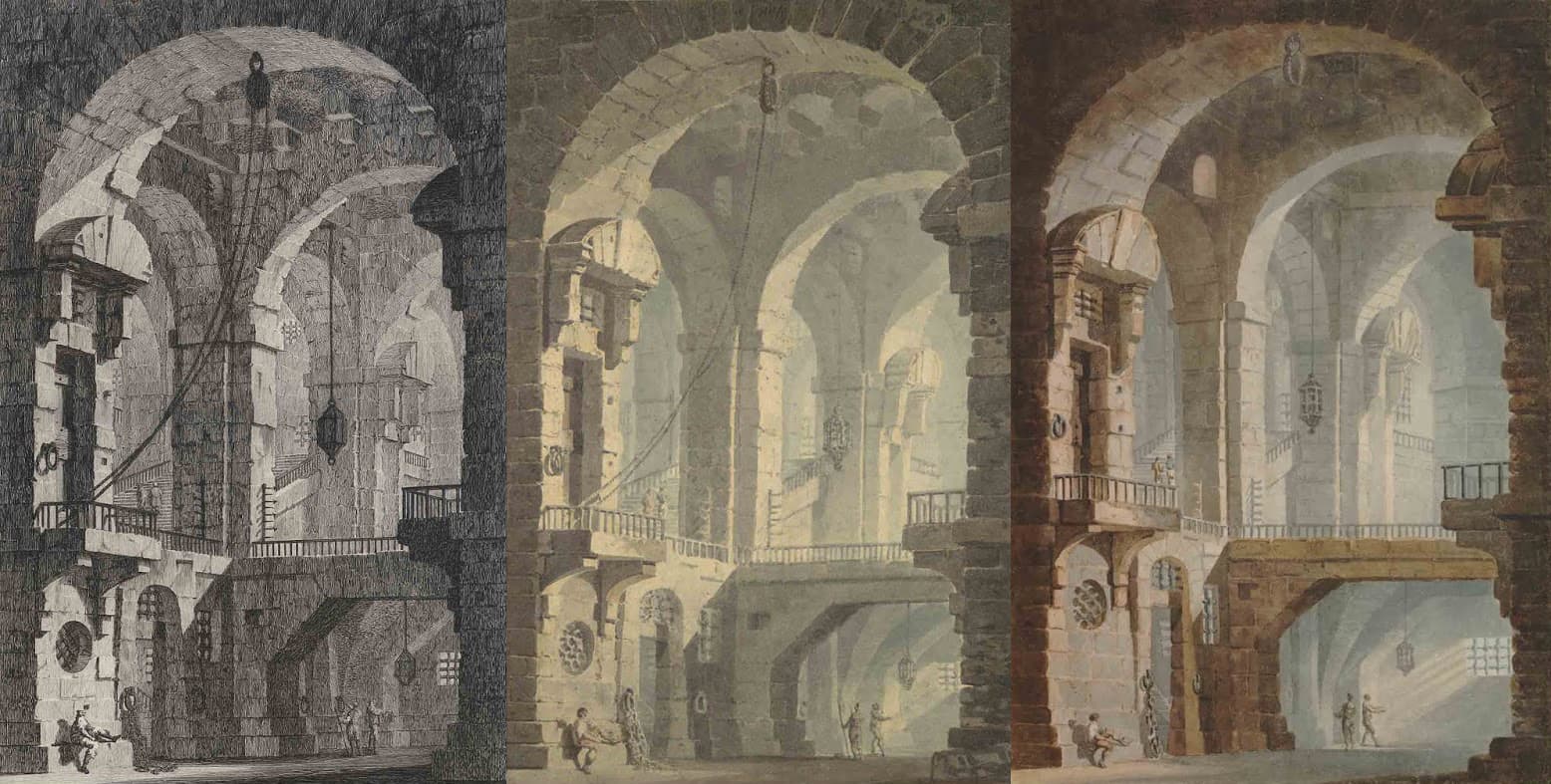
Do you want to read a book about a druid-cum-buddhist-cum-mathematician in a sort of beautiful Giovanni Piranesi-esque world where his only companion is a mysterious stranger he calls The Other?
Then this is the book for you.
The books primary thesis that it imprints upon you is I think one of Earth Mother naturalism. The character reminds me of yak herders in Tibet, described in the document "The Last Yak Song: A Recount of the Decline of Pastoral Herding in Lower Mustang"
In this crevice of these hills, in a gentle smile of the land, stands the herder. In the darkness he is a silhouette, as much a part of the landscape as the tree beside him. He moves with a grace down the mountain, following a secret choreography, dancing with an ease and comfort that disguise the steep terrain and slick snow now coating the scene.
Contrast this with this quote from the book about the cold wind of winter:
I forced Myself to return to the Third Northen Hall where I ate a little fish and drank some water. Then I revisited all my favourite Statues: the Gorilla, the Young Boy playing the Cymbals, the Woman carrying a Beehive, the Elephant carrying a Castle, the Faun, the Two Kings playing Chess. Their beauty soothed me and took me out of Myself; their noble expressions reminded me of all that is good in the world.
From the above quote we can see that in a way the main character is more than just a person in a place, he is a representation of that place in a very pure sense. All of those statues are in different locations in a Piranesi-esque maze. The subconscious comfortability in his environment is notable.
Moliere, the French playwright once wrote, “singing has always been associated with shepherds, for it wouldn't seem natural for…businessmen to indulge their passions in song.” The idea of the poetic shepherd has always captured the popular imagination; From the goat herders of Nuer, to the yodelers of Switzerland, song and pastoralism have long been married. Yodelers of the central alps would sing to call their herds or to communicate between alpine villages.
When night fell, I listened to the Songs that the Moon and the Stars were singing and I sang with them. The World feels Complete and Whole, and I, its Child, fit into it seamlessly. Nowhere is there any disjuncture where I ought to remember something but do not, where I ought to understand something but do not.
The truth is that this character is in many ways someone we find aspirational. Spiritually vast and unconstrained by modernity. It even manages to display somewhat of a corruption of his idyllic life upon contact with others:
Perhaps that is what it is like being with other people. Perhaps even people you like and admire immensely can make you see the World in ways you would rather not.
"Free is good. In the winter time it is good to let your yaks free. They are clever animals, but if you keep them stuck with a herder, they'll become fools."
That being said, it occurs to me to wonder why it is that the house gives a greater variety of objects to the Other than to me, providing him with sleeping bags, shoes, plastic bowls, cheese sandwiches, notebooks, slices of Christmas cake etc., whereas me it mostly gives fish. I think perhaps it is because the Other is not as skilled in taking care of himself as I am. He does not know how to fish. He never (as far as I know) gathers seaweed, dries and stores it to make fires or a tasty snack, he does not cure fish skins and make leather out of them (which is useful for many things). If the House did not provide all these things for him, it is quite possible that he would die. Or else (whic his more likely) I would have to devote a great deal of my time to caring for him.
I don't really know what I want to say about Piranesi exactly except that truly it manages to create a unique, compelling character and mystery, whilst explaining the character and mystery, yet leaving everything yet still more mysterious. It has it both ways. A world distant to ours, a fabled magic that never appears, a mundane yet magical explanation that is still left unresolved but not meaningfully so. The characters Oneness with the House, his repudiation of the Knowledge, his contentedness with his life the way that it is despite no longer being Matthew Sorensen or Piranesi but some sort of hybrid of the two. The lack of a romance angle. The smoothness with which the story moves forward. The rationalism of the main character contrasting with his pastoral yak-herder-esque appreciation of his home in a way that feels unique and rare.
It reminds me, briefly, of the kind of writing style that I think Ayn Rand wished to have. Piranesi is ALL show don't tell. It really only has one or two sections of definite exposition. The rest is caught up as the monologue of Piranesi, his methods of thinking colouring all observations and moments. Ayn constantly needs to qualify the way that her characters act, with sentences amounting to 'he did not say it any particular way, it was a pure statement of fact', yet her rationalist characters lack earnestness and joy. They are not ubermenschen because although they have transvaluation and will to power, they are too stoic to truly embrace the love of fate (amor fati) (and further therefore, the love of life) that I see in Piranesi. Instead they are inhumanly emotionally detached. The same way a fight scene in a movie will portray terribly violent physical acts being shrugged off by the protagonist, so too will Ayn Rand's heroes suffer few emotional ups and downs.
The last line of the book is beautiful, and in itself captures the entire pastoral wisdom of Piranesi:
The Beauty of the House is immeasurable; its Kindness infinite.